Showing posts with label Bad Science. Show all posts

Wednesday, August 6, 2014

Through Darkest America, Neal Barrett Jr.

"Part of the Isaac Asimov Presents series, this provocative novel is set in a world that nuclear war has almost decimated of cities, technology and large animals. To replace farm livestock, the country's sole source of meat is genetically altered humans, without intelligence or speech. A distant civil war out west, its harsh taxes and harsher collectors, force Howie Ryder to flee his family's Tennessee farm. He falls in with outlaw Pardo, who signs on with a big meat drive only to rustle it and playsand preys onboth sides in running guns. Barrett's SF rendering of this latter-day civil war comes complete with a version of slavery, cavalry charges and a young boy representing the country's coming of age. The romantic narrative skillfully moves from a well-told if familiar story of war and the western frontier to areas of ambiguity and uncertainty that readers are left to answer for themselves."


This is, it has to be said, one of the weirdest books I've ever read. Not so much for the contents (which are pedestrian) or the style (which is standard) but for the concept behind creating a post-Apocalyptic America which is near indistinguishable from Civil War era America (right down to an actual civil war) and has very little in the way of actual post-Apocalyptic America.

Billed as a book about one man's journey through an America devastated by nuclear conflict, and with the Isaac Asimov presents handle to boot, I expected there to be a little bit more exploration of 'after the end' style ideas. Instead, the main consequences seem to have been a technological collapse (valid), the complete disappearance of all black people and animals in America (errr) and the emergence of a shell-shocked untermensch of people who are used as livestock and a foodsupply.

The problems with much of the book stem from its synthesis of post-apocalyptic savagery and a frontiersman spirit which only evokes the old west or the war between the states. This leads to some slightly on the nose, and seemingly unintentional, parralels once the business of slave herding comes in, which come across as a little bit too much of a 'what if we just ate all the African-Americans?'

This really is a problem; the main character is taken to see a stuffed 'Nigger' at the local fair, right before we find out that his family's farm rears people to be eaten. They are explicitly stated to be non-human, but clearly once were and are indistinguishable from humans other than there vacant nature. The aforementioned disappearance of all the animals, and also all the black people doesn't help. The main conflict is between the Government in the industrial heartlands and the rebelling South. For anyone with even a passing familiarity with American history this should be ringing alarm bells.

In no way am I intending to suggest that the author is racist, or that this is a racist book, but it certainly has racist imagery and, I'm sure, unintentionally racist themes which make it an uncomfortable read. This doesn't sit well with the rest of the story which is a dark but ultimately shallow story, a version of which was done better by Patrick Ness in The Knife of Never Letting Go.

It fails more as a post-apocalyptic imagining than a story altogether, but there are certainly better novels exploring the same idea. This would almost certainly now be a book aimed at teens, but there so many better novels set after the fall of civilisation for a teen audience that this would barely excite notice.

Also Try:
Patrick Ness, The Knife of Never Letting Go
John Christopher, The Tripods
George R. Stewart, Earth Abides
Cormac McCarthy, The Road
Daniel Woodrell, Winter's Bone

Saturday, January 4, 2014

Godzilla: The Half Century War, James Stokoe

"The year is 1954 and Lieutnant Ota Murakami is on hand when Godzilla makes first landfall in Japan. Along with his pal Kentaro, Ota makes a desperate gamble to save lives... and in the process begins an obsession with the King of the Monsters that lasts fifty years!"


I really can't recommend this book enough - if you like Godzilla, non-superhero comics or just incredibly detailed art, then you HAVE to read this.

Stokoe is a master of fine detail. I mentioned in my review of Welcome to Megalopolis how much I admire the art of Jim Caliafore, for its depth of deisgn, but what's achieved by more non-mainstream artists like Stokoe and Ulises Farinas is breathtaking.

Take the panel below, a scene of Godzilla advancing through Tokyo during his first sighting, with a Japanese tank attempting to distract him from the fleeing refugees in front. A city scene featuring finely detailed buildings, the monster himself and the horde ahead of him. All are lovingly detailed, with no skimping. Compared to so many superhero comics, where a light attempt at a background is often to simply colour a flat service it's astounding.
James Stokoe (uncoloured), http://www.comicbookresources.com/?page=article&id=39274
The comparison with Farinas is an easy one; both produce craftman-like independent comics, and in 'Gamma' Farinas created a story of epic monster mayhem, through a prism of Pokemon and Power Rangers.

Ulises Farinas 'Gamma' ,http://comicsalliance.com/ulises-farinas-gamma-interview-dark-horse-presents/
But to boil Stokoe and Farinas down to simply being great artists does them a disservice. Half Century War, far from being simply a chance for Stokoe to indulge himself, is a wonderfully written book of obsession, loss and failure - what it means to live in a world in which sentient natural disasters have essentially made the military defunct, and in which total annihilation is only an new emergence away. It clings tight to the spirit of the original, whilst telling a neat history of the character through the eyes of one man.

It's essentially Don Quixote, with giant irradiated dinosaur-lizards.

I've written before about my love of Godzilla as a concept ( http://monsterawarenessmonth.wordpress.com/2011/02/16/remake-and-reboot/ ) and I love that this is a book that not only takes Godzilla seriously as a character but retells the story in a new light, introducing antogonists, plots and themes which dovetail with, and enhance, the movies.

And Stokoes meticulously time-consuming art doesn't just focus on individual pieces of rubble, buildings or people - his monsters are beautiful and horrifying, exactly as they should be. There's a two page spread of multiple warring beats, where the focus of the panel is maintained by a moving van threading through the warzone. It's masterfully articulated, maintaining the readers eye line at all times, moving them through a densely populated page without a break and allowing them time to drink in the power, size and destructive capability of Godzilla and his ilk.

It is, in short, everything that you should read.

Also Try:
James Stokoe, Orc Stain
Ulises Farinas, Gamma
Jeff Parker, Thunderbolts: Violent Rejection

BZRK, Michael Grant

"These are no ordinary soldiers. This is no ordinary war. Welcome to the nano, where the only battle is for sanity. Losing is not an option when a world of madness is at stake. Time is running out for the good guys. But what happens when you don’t know who the good guys really are?

It’s BZRK. Noah and Sadie: newly initiated to an underground cell so covert that they don’t even know each other’s names. Here they will learn what it means to fight on a nano level. Soon they will become the deadliest warriors the world has ever seen. Vincent: feels nothing, cares for no one; fighting his own personal battle with Bug Man, the greatest nano warrior alive.  The Armstrong Twins: wealthy, privileged, fanatical.

Are they the saviours of mankind or authors of the darkest conspiracy the world has ever seen? The nano is uncharted territory. A terrifying world of discovery. And everything is to play for..."


To be honest, it has been so long since I read this that I don't fully remember all of it.

But here's what I have got. BZRK is your standard everyday tale of people who control nanotech to 'hack' the minds of others, carrying out personality (and policy) adjustments as well as assassinations in order to take control of the world. Battles are carried out, by and large, by teens controlling nanotech to take over the world.

So, so, wonderful.

Not to mention the fact that this is written by one half of the pair behind Animorphs. Alongside his wife, K. A. Applegate, Grant wrote my favourite series of all time, a series notable for its brutal realism about conflict, it's willingness to put teenage protagonists in mortal peril and actually follow through on that. All in all, a series in which a global conflict over the literal minds of the leaders of the free world isn't necessarily going to go well.

It's a cracking read, in the vein of the dystopian fiction that so much of teenage fare has become, with a more technological side which is bound to appeal to most teens. Well worth a read, in other words.

Also Try:
K. A. Applegate, Animoprhs
Michael Grant, Gone
Patrick Ness, The Knife of Never Letting Go
Suzanne Collins, The Hunger Games

Zoo, James Patterson and Michael Ledwidge

"All over the world, brutal animal attacks are crippling entire cities. Jackson Oz, a young biologist, watches the escalating events with an increasing sense of dread. When he witnesses a coordinated lion ambush in Africa, the enormity of the impending violence becomes terrifyingly clear.

With the help of ecologist Chloe Tousignant, Oz races to warn world leaders before it's too late. The attacks are growing in ferocity, cunning, and planning, and soon there will be no place left for humans to hide."


I am going to differ from probably everyone else on this book, because whilst the world seemed to hate it, I thought it was wonderful. Now, part of that may be down to the fact that the story (animals turn on humanity, go on the rampage) is exactly the kind of thing I enjoy most, or it may be down to the fact that the writers clearly are enjoying themselves way too much to care about things like facts, science or consistency.

And Boy, do they not care. Going on the basis that pheromones are things that exist, the book posits that a new pheromone could change the behaviour of every single male animal worldwide, causing them to attack humans. In packs. The real victim isn't humanity though, it's continuity, as the authors introduce important plot lines (like only male animals attack people) having forgotten that the very first attack they describe is from a lioness. And when characters disappear halfway through a chapter and never reappear again. This is all pretty normal.

But there's still a real joy to it all, whether descriptions of massive dog packs occupying major citites, or descriptions of special forces units against bears. Even when it doesn't make sense (which is every few pages), or when the science is bad (I mean, really bad - like Michael Crichton bad) it's carried along by the fact that another idea will be introduced by the next chapter and everyone will forget exactly what the problem was.

Also, the REAL villains are entitled rich people, and I think we can all get on board with that.

Also Try:
James Patterson, Maximum Ride
Michael Crichton, Next, Congo


Friday, May 10, 2013

The Burning Mountain, Alfred Coppel

"BASED ON ACTUAL U.S. AND JAPANESE WAR PLANS, ONE OF THE MOST UNUSUAL AND POWERFUL WAR NOVELS EVER WRITTEN AN UNFORGETTABLE DRAMA OF HEROISM,LOVE AND SACRIFICE!"


The Burning Mountain is a 'novel of the invasion of Japan', probably the least written about alternate World War Two strand. It's well researched, manages to portray at least one convincingly complex relationship between people from the two cultures, and teeters throughout on whether it wants to make this a full blown Jingoistic take on World War Two.

It's constantly in danger of over extending itself in its portrayal of Japanese culture and warfare. When this is used as a tool to show the superiority of the Allies over the NAZIs it's understandable. But the double standard meted out to the Japanese sits less comfortably. Whilst their war crimes were equally egregious, the overall storyarc of the book is that, disgusted by the use of civilians in defending their homeland, the US has no choice but to use Atomic weapons on Hiroshima.

Which is fine, except for the squeamishness about the way in which prisoner of war are treated, that the Japanese defend their home islands, the very fact that they choose to fight at all,  all of it is treated as though it's an alien concept, creating the idea that the Japanse are barbarians and that the bombing is a righteous one. It's an odd point to reach, when the moral highground is taken by the people murdering an entire city, in the name of preventing the civilians who will otherwise be forced to fight and die against the invading Americans.

There's a real sense of Allied superiority, whether in terms of the quantity or quality of arms and men they can throw at Japan, which is treated by the Japanese characters as growing evidence of their own inadequateness in the face of the American invaders.

Its sub-Turtledove dialogue, and introduction of characters to be killed a page later, add up to an unsatisfying novel, which short cuts to the end before any defining land battles can take place, and mostly skips over the wider conflicts in favour of small, guerrilla squad tactics and air battles between two totally outmatched forces.

Interesting for its use of Operation Coronet and Ketsugo only, stick with Turtledove for characterisation and description.

Also Try:
Harry Turtledove, Days of Infamy
Robert Conroy, 1945

Saturday, April 20, 2013

Avengers: Avengers World, Jonathan Hickman

"The greatest heroes in comics together on one unbeatable team. The Avengers ""go large,"" expanding their roster and their sphere of influence to a global and even interplanetary level. When Captain America puts out his call -who will answer? Big threats, big ideas, big idealism these are the Avengers NOW!"


The first volume of the all new Avengers run by Jonathan Hickman is something I've been waiting for since the first issues was released. I picked it up as a comic but decided it was more cost effective to wait for the trade instead, so as this was released in mid-week I decided to treat myself today.

It was well worth it. Whilst not a decompressed storyteller in the style of Bendis, Hickman's Avengers run is one which is best enjoyed when you can see the bones of the whole arc. Unlike his Manhattan Projects, a comic which exists to be read monthly, this is a more epic, focussed run. Whilst some of the talking-head tropes of Bendis's run still exist, especially in how Tony and Steve interact in choosing the team, this is much more action focussed. Unlike many books on the shelves now Avengers is a comic that can be read monthly - the first six issues include three one-and-done origin stories (for Smasher, Hyperion and Captain Universe) as well as a three issue introduction to the new team.

The biggest controversy here is the expanded roster of the Avengers to include mission specific teams, including Shang Chi, Cannonball and Smasher. Whilst Cannonball is an established character in the X-Men and Shang Chi has a long history, if no real pedigree or status in the Marvel Universe, it's Smasher who's my early favourite new Avenger.

The first human member of the Shiar's Imperial Guard, she's one of many 'Smasher' class heroes, which nicely brings in the cosmic side of the Marvel Universe. If Bendis was all about street level heroics, then Hickman seems to be about every level - five of the characters included in the team could be classed as individual heavy hitters, yet they mix alongside Hawkeye and Black Widow - essentially, the Avengers movie team.

The book itself is of a different style to the standard Marvel Premiere edition design that they've used for whole Bendis era. It's obviously Hickman designed, showcasing his flair for branding and mechanics - it's a lovely book and stands out from the rest of the shelf, although its bare spine and blue on white treatment lends it a little too much of an Image title feel.

Definitely pick this up, it looks to be going some really good places. I can't wait to get the next volume!

Also Try:
Brian Michael Bendis, New Avengers
Jonathan Hickman, The Manhattan Projects
Matt Fraction, Hawkeye
Grant Morrison, New X-Men

Monday, April 15, 2013

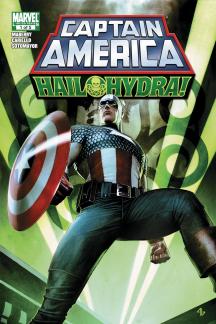
Captain America; Hail Hydra, Jonathan Maberry

"From the dark days of World War II to the Heroic Age, witness the brutal battle between Captain America and the immortal evil known as Hydra! How far back has the gruesome group been killing its way to capture the secrets of eternal life? What can Steve Rogers do to halt its sinister spread when the horrific hordes of the undead rise to stop him? Find out as award-winning horror novelist Jonathan Maberry (DOOMWAR) teams with five different artists to capture five different time periods - including Sergio Cariello (Lone Ranger), Tom Scioli (Godland), Phil Winslade (Wonder Woman), Kyle Hotz (ANNIHILATION: CONQUEST - WRAITH) and Graham Nolan (X-MEN FOREVER)! Guest-starring the Falcon, Black Panther, Nomad, Nick Fury and the Avengers! Collecting CAPTAIN AMERICA: HAIL HYDRA #1-5."


Because I've been picking up the Brubaker run of Cap stories I figured I would give this one a shot - the art looked nice and it was about Hydra, who are usually fun to see beaten up. But I definitely wasn't expecting this book to be quite so good.

Let me go further than that. This is the single best Captain America book I've read. Better than Brubaker.

It has everything you could want from a Captain America book - opening with a mission to destroy a Nazi science project reanimating the dead and continuing through the ages, from Classic Avengers, to Cap and Falcon, through the Busiek era and finally to the Heroic Age Cap. Each issue stands as a chapter in the ongoing war against Hydra and their mission to overcome death and create a new race of immortals.

It adds significantly to the Capt Mythos, positing that the Lazarus serum introduced here is what kept Cap alive alongside the Super Soldier Serum. Whilst it conveniently ignores Nick Fury's Infinity Formula, something that one would imagine would be of use to anyone gathering together materials for an elixir of youth, it ties in all sorts of great ideas, such as Thor being a target for his God blood.

But its the art that really makes it - a collection of excellent, but lesser known, artists each take the different ages and its great to see the different styles next to one another. Tom Scioli in particular draws one of the most fascinating versions of the first Avengers team I've ever seen. His art is so atypical of conventional superhero looks, yet so Kirby-esque in its design that it can look almost ridiculous - giants heads and massive smiles leave everyone looking like Puppet Master, but for some reason it works perfectly for a storyline that is all about the boundaries of science. It's made me want to hunt down more stuff by Scioli, because I absolutely love his art here, and that's a pretty fantastic thing for me to find.

If you're at all a fan of Captain America, Marvel or just great comics you need to read this.

Also Try:
Captain America: Winter Soldier, Ed Brubaker
Secret Warriors, Jonathan Hickman
Wolverine: Enemy of the State, Mark Millar

Sunday, February 24, 2013

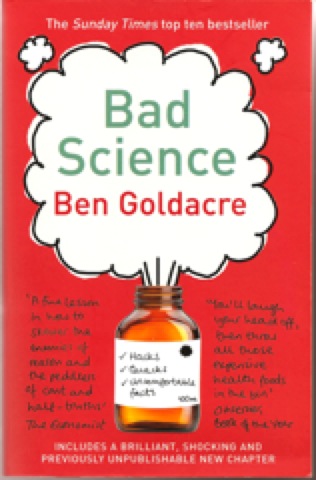
Bad Science, Ben Goldacre

"Have you ever wondered how one day the media can assert that alcohol is bad for us and the next unashamedly run a story touting the benefits of daily alcohol consumption? Or how a drug that is pulled off the market for causing heart attacks ever got approved in the first place? How can average readers, who aren’t medical doctors or Ph.D.s in biochemistry, tell what they should be paying attention to and what’s, well, just more bullshit?


Ben Goldacre has made a point of exposing quack doctors and nutritionists, bogus credentialing programs, and biased scientific studies. He has also taken the media to task for its willingness to throw facts and proof out the window. But he’s not here just to tell you what’s wrong. Goldacre is here to teach you how to evaluate placebo effects, double-blind studies, and sample sizes, so that you can recognize bad science when you see it. You’re about to feel a whole lot better."


I you don't get mad after reading this book, you probably didn't understand it.

I don't prentent to be any great expert in scientific thought - whilst I enjoy science it's very much of the popular science end. Even my knowledge of my twin interests of space and dinosaurs can be pretty quickly covered by the science i've got from contemplative fiction.

Bad Science is as much a polemic as a science book however, a furious debunking of the worst of pseudo-sceience, media coverage of science and science teaching. It's coolly analytical, content to let the facts set out on the page do the work for it in accusing and damning those with an agenda in the science community.

Sometimes this can seem a little bloodless - Goldacre rarely seems to go far enough, and his attacks on the social science and arts students who make up the media and who he believes missell science because it's beyond them is one of his most outspoken attacks, rarely speaking so harshly against mendacious, misleading and immoral scientists themselves.

Despite this unevenness of tone when hits do land they pack weight - the homeopathy scetion in particular is brutal in it's evisceration of the false teaching and lies told by those with an agenda, as well as the stupidity of those who would believe it.

It's a book that should be read, and much like Belching out the Devil, acted upon. Already the tools that Goldacre provides have been vindicated in looking at the front page coverage of new 'science'. Essential reading for anyone interested in science, the media or healthcare.

Also Try:
Belching out the Devil, Mark Thomas
A Short History of Nearly Everything, Bill Bryson
The Manhatten Projects, Jonathan Hickman


Thursday, January 31, 2013

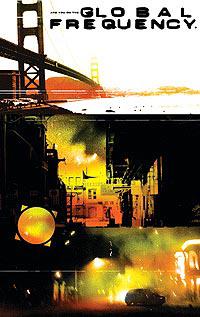
Global Frequency, Warren Ellis

"Created by Entertainment Weekly "It" writer Warren Ellis, Global Frequency is a worldwide rescue organization that offers the last shred of hope when all other options have failed. Manned by 1001 operatives, the Frequency is made up of experts in fields as diverse as bio-weapon engineering and Le Parkour Running. Each agent - equipped with a special mobile vid-phone - is speciffically chosen by Miranda Zero, enigmatic leader of the Global Frequency, based on proximity, expertise, and, in some cases, sheer desperation!"


Every time I read something by Warren Ellis I'm reminded how much I love his work.

I mean, obviously, he's great, and on a purely intellectual level, I know he's great. But somehow I always forget just how much he's written that I absolutely adore.

The Authority, Planetary, Transmetropolitan. All cracking. And NEXTWAVE, probably the most comicy comic ever.

And now, add to that Global Frequency, a book that reminds me how much I love Warren Ellis writing Fringe style science investigations, detective work and crazy situations. Much like Planetary this is a comic that explores big ideas. Weaponised black holes, Alien memetic incursions, cyborg supermen - every issue has a totally different feel (and the rotating artist means a totally different look too)

The central idea, a super-national organisation with 1,001 members; each an expert in a specific field, who can be called upon to solve crises beyond the reach of anyone else. It moves around the idea of traditional superheroes, whilst bringing in enough high concept science as to make anything possible.

These are human heroes, masters of a craft, solving non-human and post-human problems - like a hundred strong Thunderbirds team.

But like NEXTWAVE this is a series that seeks to transcend the stereotypes of comics. One issue is simply a fight between two people. Panel after panel of two men punching and kicking one another, escalating into stabbings and limbs being pulled off. It quickly approached and surpasses parody - played totally straight and drawn with sombre seriousness.

This is an excellent antidote to the silliness and unthinking extravagance of mainstream cape comics - if you like anything Ellis has written, this is amognst the best.

Also Try:
Warren Ellis, Planetary
Warren Ellis, Transmetropolitan
Warren Ellis, NEXTWAVE
Jonathan Hickman, The Manhattan Projects
Brian Wood, DMZ