Showing posts with label Non-Fiction. Show all posts

Tuesday, October 28, 2014

The Male Brain, Louann Brizendine M.D

"Dr. Louann Brizendine, the founder of the first clinic in the country to study gender differences in brain, behavior, and hormones, turns her attention to the male brain, showing how, through every phase of life, the "male reality" is fundamentally different from the female one. Exploring the latest breakthroughs in male psychology and neurology with her trademark accessibility and candor, she reveals that the male brain:

*is a lean, mean, problem-solving machine. Faced with a personal problem, a man will use his analytical brain structures, not his emotional ones, to find a solution.
*thrives under competition, instinctively plays rough and is obsessed with rank and hierarchy.
*has an area for sexual pursuit that is 2.5 times larger than the female brain, consuming him with sexual fantasies about female body parts.
*experiences such a massive increase in testosterone at puberty that he perceive others' faces to be more aggressive.

The Male Brain finally overturns the stereotypes. Impeccably researched and at the cutting edge of scientific knowledge, this is a book that every man, and especially every woman bedeviled by a man, will need to own."


Loaned to my by Jim, my Father in law, who is a counsellor and Psychologist, this is a compulsively readable breakdown of what's going on inside Men's heads through their lives, from childhood to old age, and how the competing biological drives and hormones their bodies release.

It's endlessly fascinating, both as an insight into typical human development, and for the knowledge it contains. Facts about every aspect of the brain are astonishing anyway, and to see them explain and predict the conscious and unconscious desires and demands of a person is incredibly interesting.

The mix of science and anecdotal experience is jarring, however, and the constant use of Male friends or clients of the author and their actions that provide examples and evidence to back up her claims is unnecessary. I trust that the author knows what she's discussing, and her use of case studies I can't study doesn't make it more readable or reliable.

But this is probably brilliant if you have a male child; I would certainly say it's provided insight into my own thoughts and actions, and stuff I can always use to prove JJ wrong. So that's good, anyway.

Also Try:
Louann Brizendine, The Female Brain


Monday, October 27, 2014

Know Why You Believe, Paul. E. Little

"Have you ever asked


  • Do science and Scripture conflict?
  • Are miracles possible?
  • Is Christian experience real?
  • Why does God allow suffering and evil?

    These questions need solid answers. That's what a million people have already found in this clear and reasonable response to the toughest intellectual challenges posed to Christian belief. This edition, revised and updated by Marie Little in consultation with experts in science and archaeology, provides twenty-first-century information and offers solid ground for those who are willing to search for truth. Including a study guide for individuals or groups, the classic answerbook on Christian faith has never been better!"


  • Know Why You Believe is a wide casting look at the 'most common' questions that non-Christians ask; things like whether Science and History are consistent with the Biblical narrative, whether God is good, and all of the other questions you would expect. This is part of the problem; these hoary old questions have been rehashed so much that they barely provide anything new on either side. Like two grandmasters playing chess, both sides know the best moves to make and the opening gambits are simply about manouvering. It's only by going deeper that anything actually interesting or challenging can be reached.

    This, however, is very much a surface level introduction, and if you're keen to just read one book and be convinced, you probably will be. It's well argued, impeccably sourced and clearly articulated, but it really is only skimming the surface. The chapter on science is no comprehensive rebuttal of The Selfish Gene or God Delusion, the two most prominent critiques of religion from Dawkins, which would be the kind of thing any Christian faced with this question in real life would need to answer.

    In fact, much of its muscle comes from a reliance on Biblical exegesis and authority, a difficult position to maintain if the reader doubts the inerrancy of that text. This leaves it in a halfway house of trying to prove the Bible, whilst asserting the relevance of the Bible as the ur-text and proof. Neither legally rigorous or logically consistent, this is best read as an introduction, for a few snappy soundbites and quotes, and then moved on from, swiftly.

    Also Try:
    Lee Strobel, Case for Christ
    Richard Dawkins, God Delusion
    Karen Armstrong, The Bible: A Biography
    Tom Wright, Creation, Power and Truth

    Sunday, October 26, 2014

    Down And Out In Paris And London, George Orwell

    "This unusual fictional account, in good part autobiographical, narrates without self-pity and often with humor the adventures of a penniless British writer among the down-and-out of two great cities. In the tales of both cities we learn some sobering Orwellian truths about poverty and society."


    Britain's most eminent author, or, if you're Will Self, mediocrity, Orwell's fiction often gets most of the praise, but it's his insightful social commentary which is the best place to start anyone interested in him as a writer. Whilst 'Animal Farm' and '1984' are better known and more highly regarded, it's in the books of social commentary and biography that his humanity is based.

    Down and Out is the chronicle of Orwell's time destitute in the capitals of France and England, a time spent doing mind-numbing jobs or back breaking labour for very little pay, or living on the streets as a tramp.

    Whilst much of it is interesting, especially during his time in Paris working in the kitchens and back rooms of the hotels and restaurants, it's once he gets to London and hits the real bottom of the socio-economic ladder that this becomes more than just a dry recourse of events. His heartfelt telling of the plight of those ignored by scoiety, cheated by the system and left to rely on demeaning charity handouts is as timely now, in an age where the social safety net is fraying and homelessness on the rise, as it was then. His insight, and the humanising of callously overlooked human beings, is a vital part of recognizing that there's an issue. Most tellingly, he debunks many of the myths that still cling to poverty; of abuse of the system, and of personal responsibility for their own misfortune, myths that paint victims as perpetrators and seek to maintain an abusive status quo.

    Really good reading.

    Also Try:
    George Orwell, Homage to Catalonia
    George Orwell, Animal Farm
    Karl Marx, The Communist Manifesto


    Monday, October 13, 2014

    America Alone; The End Of The World As We Know It, Mark Steyn

    "It's the end of the world as we know it...Someday soon, you might wake up to the call to prayer from a muezzin. Europeans already are. And liberals will still tell you that "diversity is our strength"--while Talibanic enforcers cruise Greenwich Village burning books and barber shops, the Supreme Court decides sharia law doesn't violate the "separation of church and state," and the Hollywood Left decides to give up on gay rights in favor of the much safer charms of polygamy. If you think this can't happen, you haven't been paying attention, as the hilarious, provocative, and brilliant Mark Steyn shows to devastating effect. The future, as Steyn shows, belongs to the fecund and the confident. And the Islamists are both, while the West is looking ever more like the ruins of a civilization. But America can survive, prosper, and defend its freedom only if it continues to believe in itself, in the sturdier virtues of self-reliance (not government), in the centrality of family, and in the conviction that our country really is the world's last best hope."

    Mark Steyn's America Alone is the kind of book that I pick up every now and then and read in the same way Southern schools approach creationism and evolution; it's reading the controversy, Frankly, if the above quote doesn't represent it enough, American Alone is a brilliantly though out, well argued and utterly incorrect assertion that Islam is on an unstoppable path to taking over Europe and the world.

    There's so much wrong about this that even the stuff that's genuinely interesting and important can be ignored; the work on demographics, and attempt to get beyond the stale arguments between conservative and liberals about Islam to talk about what Islam itself believes is good, but too often if becomes bogged down in reactionary dogma and xenophobic spite.

    If you've seen Affleck vs Maher recently, you'll know the thrust of the argument; Islam is a threat not just to conervative ideology but liberal too, there's more of them every year and less of us, and sooner of later their ideas win democratically because they can muster the only voices. It all relies on an us-them attitude, and ignores pretty much anything on progressive or liberal voices within Islam, but it's an argument that seems to be growing in popularity and prominence.

    It's worth reading then, if only to be able to refute it, and to quote it in disbelief to incredulous friends.

    Also Try:
    This American Life: A Not So Simple Majority; http://www.thisamericanlife.org/radio-archives/episode/534/a-not-so-simple-majority

    How Not To Be American: Misadventures in the Land of the Free, Tood McEwen

    "'This new American uniform - the baseball cap, t-shirt, shorts and trainers (why not a scooter?) is not about looking good. It's about disappearing into a new, unofficial, global army of cultural babies. It says: I eat hamburgers and watch TV and chew gum all day, I want everyone to play my game, You have to be nice to me and if you're not I'm gonna shoot you, I can't understand a word you say… and what is that but American foreign policy?' Todd McEwen left the United States in 1980, but it's still driving him crazy. He worries about cheeseburgers, Cary Grant, Henry David Thoreau, democracy, the Elks Club and Daffy Duck. Join him on his acid-reflux examination of what America has come to be."


    I approached this anticipating an American version of the anthropology, or at least quasi-anthropology, of something like Kate Fox or Bill Bryson. It's really, really not, Instead, it's McEwen's own take on an autobiography, closer to a series of essays and thoughts on subjects from Cary Grant's suit to california politics.

    At one point there's a surrealist dream sequence piece.

    It's hella weird, and the schtick gets old well before it ends, with the roughly 60% that's really good being heavily outweighed by the stuff that really isn't.

    And it definitively doesn't explain how not be American.

    Also Try:
    Bill Bryson, A Walk in the Woods
    Kate Fox, Watching the English
    Barack Obama, Audacity of Hope

    Prime Minister Portillo and other things that never happened, various

    "What if Lenin's train had crashed on the way to the Finland Station? Lee Harvey Oswald had missed? Lord Halifax had become Prime Minister in 1940 instead of Churchill? In this diverting and thought-provoking book of counter-factuals a collection of distinguished commentators consider how things might have been."


    I find these non-fiction 'What if?' books slightly sad, as they work as neither a truly good history book, or as a work of historical fiction. This is compounded by a mixed bag of authors, who range from those catalogueing slight alterations to full blown changes in the timeline, in a variety of styles, with varying degrees of success.

    One of the big issues is that very few of these imagine a world changed all that much by the alterations they describe; most are obscure, or at least historically distant, enough that it's hard to see how a revitalised party or individual could have impacted more. Even greater changes, like JFK surviving or Churchill being passed over for Halifax engender only slight fluctuations - legislation passes slower, or the pace of the war moves differently, with the same fixed outcome.

    It's a very Fukuyama-esque book, where the outcome we currently have is seemingly all that's possible. Compare and contrast to real works of speculative history, such as Harry Turtledove, and the difference is huge.

    Often dry, sometimes interesting, but only fitfully worth dipping into, this is a book more for the writers than the readers, and is best passed over in favour of better offerings.

    Also Try;
    Robert Harris, Fatherland
    Eric Flint; 1631
    Harry Turtledove, Guns of the South

    Monday, September 15, 2014

    Military Blunders, Saul David

    "Retelling the most spectacular cock-ups in military history, this graphic account has a great deal to say about the psychology of military incompetence and the reasons even the most well-oiled military machines inflict disaster upon themselves. Beginning in AD9 with the massacre of Varus and his legions in the Black Forest all the way up to present day conflict in Afghanistan, it analyses why things go wrong on the battlefield and who is to blame."


    Jalyss got me this book for Christmas and I finally devoured it before the wedding.

    It's exactly what it says on the tin; a look at military blunders. Divided into various chapters focussing on different modes of blunder, from incompetent leaders, to poor planning and intelligence to disastrous excecution.

    Some of the stories are tragic, most farcically stupid. Incompetence tends to be a key theme. Many of the same people appear again and again. Churchill appears more often than one might expect.

    There's a definite bias towards English disasters, with a very obvious historical bias towards the period of 1850 to 1920 (i.e, Victorian and World War One English military disasters) which is a slight let down, as these are fairly similar in scope and mostly rely on the fact that the Imperial generals underestimated anyone who wasn't white or British.

    Still, entertaining, and I learnt some interesting stuff in it, especially the chapter on the American civil war.

    Also Try:
    Amazon has bout 30 books called Military Blunders, try one of those!

    Wednesday, August 6, 2014

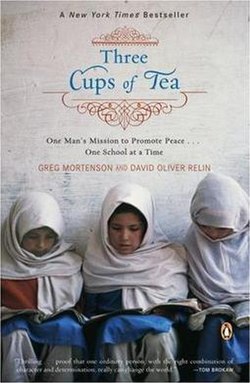
    Three Cups of Tea, Greg Mortenson and David Oliver Relin

    "'Here we drink three cups of tea to do business; the first you are a stranger, the second you become a friend, and the third, you join our family, and for our family we are prepared to do anything - even die' - Haji Ali, Korphe Village Chief, Karakoram mountains, Pakistan.

    In 1993, after a terrifying and disastrous attempt to climb K2, a mountaineer called Greg Mortenson drifted, cold and dehydrated, into an impoverished Pakistan village in the Karakoram Mountains. Moved by the inhabitants' kindness, he promised to return and build a school. "Three Cups of Tea" is the story of that promise and its extraordinary outcome. Over the next decade Mortenson built not just one but fifty-five schools - especially for girls - in remote villages across the forbidding and breathtaking landscape of Pakistan and Afghanistan, just as the Taliban rose to power. His story is at once a riveting adventure and a testament to the power of the humanitarian spirit."


    The weirdest thing about Three Cups of Tea is that it's a hugely enjoyable book until you actually go and read further, because it turns out that everything you've read in this, nominally, non-fiction book is ... Broadly untrue? Vaguely inaccurate? A pack of total lies? Whichever version you go for, it kind of undermines the rest of the narrative. That's a shame, because without the critique Mortenson's story is wonderfully inspiring and compelling.

    A mountaineer who stumbled across a Pakistani village whilst descending K2 and was bought back to health by the people there, promising to return and build them a school as thanks, Mortenson is an unfailingly interesting person to read. For the first half of the story I was enraptured by his account, and the breathless narration by journalist and self-professed Mortensom disciple Relin. The story is vividly told, including history, political commentary and context aplenty, alongside an engaging story of triumph against the odds in building the first school despite opposition from corrupt and desperate Pakistani's and indifferent Americans.

    Unfortunately, I then went online and read some of the commentary to the book, which sets the benevolent charity Mortenson founded within a wider narrative of financial mismanagement, endemic internal corruption and absolutely no willingness to address these issues. Mortenson's slacker background and inability (and unwillingness) to work with 'the man' suddenly becomes less endearing and more a flashing warning sign that he absolutely should not be in charge of a multi-million dollar organisation. Anyone who is almost uncontactable most of the time, ignores official forms and works from his gut in selecting staff (all traits which are presented as utterly positive and vital to the success of his mission) are obviously going to become liabilities when millions of dollars disappears with no paper trail or inclination to follow up on where it went.

    All of which leaves a sour taste in the mouth even before you discover that the two most electrifying moments in the book; Mortenson's near death on K2 (and subsequent arrival in that first impoverished village) and his kidnap and detention by militants in Pakistan's badlands are utterly false and never took place.

    From then on the remainder of the book is somewhat less readable as an accurate account of one mans war on poverty and lack of education.

    So, worth a read for a look at international development on a budget, but not an organisation to donate to, and certainly not an example to follow.

    Also Try:
    Jon Krakauer, http://www.thedailybeast.com/articles/2013/04/08/is-it-time-to-forgive-greg-mortenson.html
    Jon Krakauer, Three Cups of Deceit
    Joel Connely, http://www.seattlepi.com/default/article/Greg-Mortenson-Three-Cups-of-Me-1356850.php

    Tuesday, July 22, 2014

    I Can Make You Hate, Charlie Brooker

    "Would you like to eat whatever you want and still lose weight? Who wouldn't? Keep dreaming, imbecile.

    In the meantime, if you'd like to read something that alternates between laugh-out-loud-funny and apocalyptically angry, keep holding this book. Steal it if necessary.

    In his latest collection of rants, raves, hastily spluttered articles and scarcely literate scrawl, Charlie Brooker proves that there is almost nothing in this universe, big or small, that can't reduce a human being to a state of pure blind hatred.

    It won't help you lose weight, feel smarter, sleep more soundly, or feel happier about yourself. It WILL provide you with literally hours of distraction and merriment. It can also be used to stun an intruder, if you hit him with it correctly (hint: strike hard, using the spine, on the bridge of the nose)."


    Brooker is to mainstream newspaper columnists what 'Worms 3' is to 'Medal of Honour', and that's an analogy I don't feel any necessity to expand on whatsoever

    He's one of my favourite writers; a journalist with one of the most distinctive voices going, a man who can spin an insult that skewers the innocent and irritating alike. Some of his columns have changed the way that I refer to people, just for how perfectly he can summarise a person (John Kerry looks like a haunted tree, David Cameron is a Lizard). Everything he writes is readable in his tone; a mix of disgust and hatred, tempered with disappointed fury.

    This is late-era Brooker; a writer who's grown up and seems less ready to launch into hyperbolic, tongue rasping invective. He's certainly not mellow but he isn't as fierce as he once was, in part, one suspects because he isn't working the same beat. Slashing the plots and tropes of crap TV, which he did very well on his Screen Burn column is replaced by more general comment pieces on everything from his new hobby of jogging, to computers taking over the world (he dares them) and media ethics. Where his TV analysis does show up (Geordie Shore comes in for an especial shoeing) he remains pithily horrible, which is good.

    If he's not quite as scathing as he once was it certainly doesn't lessen the quality of his clear, incisive writing; metaphor laden, frequently hilarious and as prone to bouts of profound profanity laden invective as ever it remains a real joy to read, and usually as much fun to read aloud, pretending to be him, which is something Jalyss hates me doing, so she'll be quite happy to hear I've stopped reading this.

    And remember: David Cameron is a Lizard.

    Also Try:
    Charlie Brooker, David Cameron is a Lizard, http://www.theguardian.com/commentisfree/2011/oct/09/charlie-brooker-bbc-cuts?INTCMP=SRCH&guni=Article:in%20body%20link and http://www.theguardian.com/commentisfree/2011/oct/16/charlie-brooker-cameron-a-lizard
    Charlie Brooker, Screenburn

    Sunday, June 29, 2014

    Power, Creation and Truth: The Gospel in a World of Cultural Confusion, Tom Wright

    "In Creation, Power and Truth, Tom Wright invites readers to consider the crucial ways in which the Christian gospel challenges and subverts the intellectual, moral and political values that pervade contemporary culture. In doing so, he asks searching questions about three defining characteristics of our time: neo-gnosticism, neo-imperialism and postmodernity. Employing a robust Trinitarian framework, Wright looks afresh at key elements of the biblical story while drawing out new and unexpected connections between ancient and modern world-views. The result is a vigorous critique of common cultural assumptions and controlling narratives, past and present, and a compelling read for all who want to hear, speak and live the gospel of Christ in a world of cultural confusion."


    This was, like everything by Wright, really really good, a three fold exploration of what it means to be a Christian living in modern post-enlightenment society. Between this and his other books there's loads that he's written on the idea, and all of them are well worth reading, but this is probably a good introductory primer to his key views; that post-modernism and enlightenment have left us with key assumptions about the language of science, faith, politics and culture that determine how we think about these ideas and give us an inaccurate and dangerous view of what the early church and scripture means.

    There are some bits which are excellent and there is much which he has put better elsewhere. This is a book that specifically addresses post-modernism and the enlightenment in the way it affects our politics and faith, and this is probably the best reason to pick it up, as it's an interesting and stimulating critique of the foundational principles of modern liberalism, conservatism and the philosophical underpinnings of the West.

    Also Try:
    N. T. Wright, anything else
    Faith and Roger Forster, Women and the Kingdom
    C. S. Lewis, Screwtape Letters

    Saturday, June 21, 2014

    You Are Awful (But I Like You); Travels Through Unloved Britain, Tim Moore

    "Would you cheer if they sent you to Coventry? Could you stick up for Stoke or big-up Bracknell?Can you handle the thrill of Rhyl, the heaven of Hull or the mirth of Tydfil?


    In You are Awful, Tim Moore drives his Austin Maestro round all the places on our beloved island that nobody wants to go to - our most miserable towns, shonkiest hotels, scariest pubs, and silliest sea zoos...

    But as the soggy, decrepit quest unfolds he finds himself oddly smitten, and the result is a rousing, nostalgic celebration of mad, bad But I Like You Britain."


    A sort of 'Playing the Moldovans at Tennis' of Britain, this is a poor-mans version of Bill Bryson's 'Notes From A Small Island'; written as comedy rather than actual travelogue and playing up that uniquely British thing of being all too passionate about something really, really shit.

    Basically, this is these book reviews, in the Wonder Twin's style form of a book about Britain.

    Comedy books tend to be hit or miss, and comedy travel guides are dime a dozen. I read it. I can't remember much of it. I learnt one or two interesting things, but, really, crappy towns are much the same. One bad hotel, or city centre, or museum isn't that dissimilar to another, and it's hard to sustain jokes or come up with new ones when you've only got one target.

    The bit about Hull is excellent though.

    Not awful, I liked it, but there's better out there.

    Also Try:
    Playing the Moldovans at Tennis, Tony Hawks
    Notes From A Small Island, Bill Bryson
    Watching the English, Kate Fox


    Sunday, February 16, 2014

    A Walk in the Woods, Bill Bryson

    "The longest continuous footpath in the world, the Appalachian Trail stretches along the East Coast of the United States, from Georgia to Maine, through some of the most arresting and celebrated landscapes in America.

    At the age of forty-four, in the company of his friend Stephen Katz (last seen in the bestselling Neither Here nor There), Bill Bryson set off to hike through the vast tangled woods which have been frightening sensible people for three hundred years. Ahead lay almost 2,200 miles of remote mountain wilderness filled with bears, moose, bobcats, rattlesnakes, poisonous plants, disease-bearing tics, the occasional chuckling murderer and - perhaps most alarming of all - people whose favourite pastime is discussing the relative merits of the external-frame backpack.

    Facing savage weather, merciless insects, unreliable maps and a fickle companion whose profoundest wish was to go to a motel and watch The X-Files, Bryson gamely struggled through the wilderness to achieve a lifetime's ambition - not to die outdoors."


    Before ‘An Idiot Abroad’ ever cemented a vision of English travelling that revolved around an uncomprehending blankness about the achievements and successes of other nations, or a distaste for travelling to places of wonder and awe, Bryson was ALSO moodily assessing the state of the world. Far from the current, tiresomely modern exercise in banality that marks out the works of the ‘Is it just me or is everything shit? Brigade’, Bryson deconstructs the places and people around him, drawing meaning and insight from small towns, the food and the arch-locations he journeys through.

    His strength as a travel writer is often the incidental way he writes about travel; part historian and part comedian, his musings frequently resemble nothing less than streams of information – facts, figures and analysis are consumed and reassembled in pithy summations, that impart far more than any travelogue or journey plan alone ever could. Bryson at times resembles nothing less than a polymath; the range of research that went into a book such as A Walk in the Woods is intense, but his down-to-earth writing style, aversion to floridity and general good humour often convinces that these are not just post-journey findings, but simply off the cuff recitals of things he knows.

    Bryson is my favourite travel companion, and A Walk in the Woods is more than just my favourite book about travelling. Its evocation of a way of life divorced from the wider world, of men and women who mark time by the miles they’ve walked, and who are consumed by their passion, as well as for the world outside and how much we’ve lost of our place in nature is powerful and compelling. Like all the great writers, filmmakers and artists whose work is touched by a love of ‘The Green’ (to borrow an idea from Swamp Thing) reading his books makes you want to scale a mountain, or explore a forest, to lie in the grasp and allow time to pass by.

    Also Try:
    Bill Bryson, Notes From a Small Island
    Tony Hawks, Round Ireland with a Fridge
    Dave Gorman, Dave Gorman’s Googlewhack Adventure!
    Nathaniel Philbrick, Mayflower


    Saturday, January 4, 2014

    Outliers, Malcolm Gladwell

    "Why do some people achieve so much more than others? Can they lie so far out of the ordinary?

    In this provocative and inspiring book, Malcolm Gladwell looks at everyone from rock stars to professional athletes, software billionaires to scientific geniuses, to show that the story of success is far more surprising, and far more fascinating, than we could ever have imagined.

    He reveals that it's as much about where we're from and what we do, as who we are - and that no one, not even a genius, ever makes it alone.

    Outliers will change the way you think about your own life story, and about what makes us all unique."


    Probably the best endorsement for Outliers I can give is that this is the first book I can remember my Dad reading. Ever. I think at one point, about eight years ago, he flicked through a golf book (Into the Bear Pit?) but I can honestly say that I have never seen him read anything other than a weekend newspaper, a car guide or a golf magazine. So for him to sit down and read through a whole book is a major talking point in our family.

    Off the back of that I read through Outliers, and it's an excellent book that builds a convincing portrait of the social foundations that are required for truly exceptional success. Picking up a range of success stories, Gladwell demonstrates that each benefitted from innate privilege and was fortunate to be given unique opportunities, giving lie to all those that argue that hard work alone is all that is required.

    In a culture which emphasises personal responsibility, and villifies failure as the deserved consequence of not trying hard enough, it's refreshing to read about how little true success owes to being an exceptional individual, and how much it's down to where and when you were born.

    Also Try:
    Malcolm Gladwell, Blink
    Michael Lewis, Moneyball
    Mi

    Monday, November 18, 2013

    Jesus + Nothing = Everything, Tullian Tchividjian

    "It’s so easy to forget what the Christian faith is all about. We struggle so much, work so hard, and fail so often that we frequently sense something in the equation of life must be missing.
    Tullian Tchividjian argues that what we are missing is the gospel—a fuller, more powerful understanding of Jesus and what his finished work means for everyday life.
    During a year of great turmoil, Pastor Tchividjian discovered the power of the gospel in his own life. Sharing his story of how Jesus became more real to him, Tchividjian delves deeply into the fundamentals of the faith, explaining the implications of Christ’s sufficiency—a revelation that sets us free and keeps us anchored through life’s storms.
    Ultimately, Tchividjian reminds us that Jesus is the whole of the equation as he boldly proclaims that Jesus plus nothing really is everything."


    I went into this expecting something a little bit daunting from the Grandson of Billy Graham. It actually turned out a whole lot better than that, acting as a sort of guide to Collosians, alongside the experiences of Tchividjian in facing problems at church.

    It works best as an exploration of just what it means to live life with Jesus alone, eschewing the world and the things that seem important.

    JJ and I read it together, and it was well worth doing it like that - each of us were able to pull out quotes and lessons from each chapter, and it was certainly one of the most helpful books we've gone through like this.

    It's nicely accessible, so shouldn't put anyone off - the focus is obviously pretty Christian but it stops to explain unfamiliar concepts and takes a nice, steady tone throughout.

    Also Try:
    Donald Miller, Blue Like Jazz
    Rob Bell, My Velvet Elvis

    Wednesday, September 11, 2013

    What God Has Joined Together, The Christian Case For Gay Marriage,David Myers and Letha Scanzoni

    "Gay marriage has become the most important domestic social issue facing twenty-first-century Americans -- particularly Americans of faith. Most Christians are pro-marriage and hold traditional family values, but should they endorse extending marriage rights to gays and lesbians? If Jesus enjoined us to love our neighbors as ourselves, and the homosexual is our neighbor, does that mean we should accept and bless gay marriages? These and other, related questions are tearing many faith-based communities apart."


    Subtitling your book as 'The Christian Case For Gay Marriage' is an inflammatory prospect considering the difficulty in convincing many Christians that there's a case for gay anything, let alone marriage. Thankfully this is a book that is by an large an altogether subtler and more nuanced tome that the title suggests - albeit one with a very specific axe to grand.

    Starting on the supposition that the two sides of the argument (reduced down to conservative Christians and liberal everything's) can be convinced through logic and reason seems a more challenging idea than the actual argument. As the authors freely acknowledge most people's opinion is made up in advance and they choose the arguments that reinforce that stance. Despite the overwhelming evidence (both scientific, psychological and biblical) to reinforce their case it's unlikely that anyone who seriously stands opposed to homosexuality will be convinced by reason - but it does provide a wealth of arguments for those who would take up that battle to those who choose to ignore it.

    Setting the argument within the context of years of church-science battles (astronomy, global warming, contraception, women) and the changes to biblical marriage that have been accepted (divorce, interracial partnerships, female roles) they create a compelling argument in favour of strengthening marriage by welcoming gay couples that can be sold as a conservative and liberal victory.

    It contains a great breakdown of actual evidence, philosophy and biblical teaching about homosexuality and marriage, whilst never descending to platitudes. Definitely worth picking up if you want a way to advance the conversation past 'Adam and Eve, not Adam and Steve'.

    Also Try:
    Phillip Yancey, What's So Amazing About Grace
    Rob Bell, Velvet Elvis

    The Age of Consent, George Monbiot

    "A visionary road map for humanity's first global democratic revolution.  All over the planet, the rich get richer while the poor are overtaken by debt and disaster. The world is run by a handful of executives who make the most important of decisions—concerning war, peace, debt, development, and the balance of trade. Without democracy at the global level, the rest of us are left in the dark. George Monbiot shows us how to turn on the light.
    Emphasizing not only that things ought to change, but how to change them, Monbiot develops an interlocking set of proposals that mark him as the most realistic utopian of our time. With detailed discussions of what a world parliament might look like, how trade can be organized fairly, and how underdeveloped nations can leverage their debt to obtain real change, Manifesto for a New World Order offers a truly global perspective, a defense of democracy, and an understanding of power and how it might be captured from those unfit to retain it."


    Like Captive State this is a brilliant read that will make you so, so mad, although it takes a lot longer to get going and is mired in a slightly confused intent.

    Set out as a manifesto for a global democratic institution Monbiot seeks to answer the question of who rules the world, where their authority is derived and how we can change this at an international and global level.

    This is the less interesting part of the book, because Monbiot's key strength is in tearing apart the hypocrisy and deceit of the powerful, and nowhere is this clearer than when he turns his attention to the global institutions designed to help the poorest nations. His anger is infectious, in a few short chapters he rips apart the arguments and dissembling and presents a picture of Western culpability and responsibility for global poverty that cuts through the promises and words of politicians and shreds their empty rhetoric.

    Like The Bottom Billion it also has some ways in which this can be changed, but again these are secondary to the real meat of the book. As an exposé it's riveting reading, and cherry picking chapters is well worth doing.

    Unlike the Bottom Bilion, that isn't the real intent though - it's meant to be a practical means to kick start reasonable global governance, which is a somewhat lofty goal which doesn't seem to have too much backing it up. In fairness Monbiot addresses this problem at length but the conclusion he draws (better to try) doesn't really engender much hope.

    Also Try:
    www.monbiot.com
    George Monbiot, Captive State
    Paul Collier, The Bottom Billion
    Marx and Engels, The Communist Manifesto

    Monday, August 26, 2013

    The Progressive Patriot, Billy Bragg

    "What does it mean to be English? What does it mean to be British? Is the cross of St George a proud symbol of a great tradition, or the badge of a neo-Nazi? In a world where British citizens can lay bombs to kill their countrymen, where religious fundamentalism is on the increase and where the BNP are somehow part of the democratic process, what does patriotism actually mean?
    Our identity can change depending on what company we are in. For example, someone could describe themselves British to one person, Scottish to another and, say, a Londoner to another, and be right every time. But problems arise when someone tries to tell you what you are, based on your skin tone, religion, accent, surname, or whatever.
    This book is Billy Bragg's urgent, eloquent and passionate response to the events of 7 July 2005, when four bombs tore through a busy morning in London, killing 52 innocent people and injuring many more.
    A firm believer in toleration and diversity, he felt himself hemmed in by fascists on one side and religious fanatics on the other. The suicide bombers were all British-born and well integrated into our multicultural society. Yet they felt no compunction in murdering and maiming their fellow citizens. Inclusivity is important, but without a sense of belonging to accompany it, what chance social cohesion...
    But where does a sense of belonging come from? Can it be conferred by a legal document? Is it a matter of blood and soil? Can it be taught? Is it nature or nurture? The Progressive Patriot is a book we all need to read. It pulls no punches in its insights and its radical vision offers a positive hope for a country teetering on the brink of catastrophe."

    It's been a bit of a struggle for me to get through this book, not because it's not interesting but because it can't quite decide what it wants to be, and tends to get a bit exhausting as it zips between a history of the country, an autobiography and a discussion of 70s folk music and the London pub scene.

    It's an eclectic mix, and whilst Bragg certainly knows his stuff it never really coheres into a single narrative beyond "racism is bad, but I like music". It's at its most interesting when it talks about his passions; Simon and Garfunkel, the colonisation and appropriation of English history, and what it means to be English. But having read Watching the English so recently there's nothing here that seems deep enough - certainly his assetion that class has been eliminated is painfully untrue, and his optimism for the future free of race baiting and distrust isn't exactly holding up too well post-economic crash.

    It's intended to be a manifesto for left wing patriotism, showing how multiculuralism is part of what it means to be English, and reclaiming British history from the Imperial white washers and conservative reformists who attempt to take a back to basics approach to education that emphasises English achievements abroard. Unfortunately it takes too long, and is far too anecdotal to engage with a broad and difficult topic, and never comes close to providing answers.

    Also Try:
    Kate Fox; Watching the English,
    Jeremy Paxman, The English
    Bill Bryson, Neither Here Nor There

    Monday, July 8, 2013

    Watching The English, Kate Fox

    "In WATCHING THE ENGLISH anthropologist Kate Fox takes a revealing look at the quirks, habits and foibles of the English people. She puts the English national character under her anthropological microscope, and finds a strange and fascinating culture, governed by complex sets of unspoken rules and byzantine codes of behaviour.

    The rules of weather-speak. The ironic-gnome rule. The reflex apology rule. The paranoid-pantomime rule. Class indicators and class anxiety tests. The money-talk taboo and many more . . .

    Through a mixture of anthropological analysis and her own unorthodox experiments (using herself as a reluctant guinea-pig), Kate Fox discovers what these unwritten behaviour codes tell us about Englishness."


    This isn't the kind of book I normally read, but it was one that JJ picked up a year or so ago to read for her cross cultural studies class, and then when I went to America it got bought for me for Christmas, so with recommendations and a spare copy, it was pretty inevitable that I would end up getting through it. It's been a slog though - I started this before any of these reviews, it was the first book I began reading (pre-Christmas 2012) and I only just finished it.

    That's not because it's boring, or a bad book, quite the opposite. It's more that I found other things to read, and it's certainly not the kind of book I find it hard to put down. At any one time I may have two or three non-fiction books and a couple of fiction books on the go. I'll read a book in a day and then move back onto whatever I was reading beforehand. This book was always one that kept getting abandoned in favour of something else.

    Whenever I did read it though, it was fascinating. Whilst it overstays its welcome a little (especially since Fox is trying to define the rules of Englishness, which inevitably means a lot of finding similarities, and thus repetition) for the first two thirds it's an incredible run through of what makes people English - something which had me chuckling throughout, and frequently reading sections aloud to anyone who would listen. Usually JJ, who never seemed that impressed - possibly because she had already read it once.

    It's a book that will probably resonate as much with the English as with any foreigner who wishes to understand them. Unlike Bryson, who is always more interesting when writing about other places, Fox manages to locate those things which are common currency in every English persons life - their privacy issues, their dislike of communication, their love of humour. Much of it can seem oversimplified, or a reach, but there's no doubting that it's often revelatory - whole sections revealed character traits (flaws?) that I had never realised I had but which it turns out JJ had been dealing with for months. Not just from me, but from the entire country, all of whom are engaged in an unwitting cultural pantomime of one-downmanship and keep-away.

    It's the kind of book that is perfect to dip in and out of, which is conveniently what I have been doing. Whilst I can't imagine reading it all in one would be too pleasent (it's not always as fun or interesting a read as at its best, especially when it focuses on the anthropology of other classes, or anything that wasn't specific to my Englishness) it's certainly something that will make you think. In fact, it's been enough to cause arguments about anthropology in my family, something I never ever thought would happen.

    Also Try:
    Jeremy Paxman, The English
    Bill Bryson, Neither Here Nor There, Shakespeare
    Paul Cornell, Captain Britain and MI13

    Wednesday, June 5, 2013

    The Bottom Billion, Paul Collier

    "In this elegant and impassioned synthesis from one of the world's leading experts on Africa and poverty, economist Paul Collier writes persuasively that although nearly five billion of the world's people are beginning to climb from desperate poverty and to benefit from globalization's reach to developing countries, there is a "bottom billion" of the world's poor whose countries, largely immune to the forces of global economy, are falling farther behind and are in danger of falling apart, separating permanently and tragically from the rest of the world. Collier identifies and explains the four traps that prevent the homelands of the world's billion poorest people from growing and receiving the benefits of globalization - civil war, the discovery and export of natural resources in otherwise unstable economies, being landlocked and therefore unable to participate in the global economy without great cost, and finally, ineffective governance. As he demonstrates that these billion people are quite likely in danger of being irretrievably left behind, Collier argues that we cannot take a "headless heart" approach to these seemingly intractable problems; rather, that we must harness our despair and our moral outrage at these inequities to a reasoned and thorough understanding of the complex and interconnected problems that the world's poorest people face."

    The Bottom Billion is an attempt to explain why we haven't yet made poverty history, and just what the limits on aid, intervention and Western attempts to bring the poorest nations up to their level aren't working. Within that it chooses to differentiate between those developing countries that are growing, and those that contain a billion people which show no signs of development at all.

    The heart of this book is that it's based on matchless research, exhaustively detailed to show that far from being a war on global poverty we have mainly been bringing up the majority of the world blessed with positive positions and able to respond to reform.

    Collier's thesis, that a shift to raising the standards in the bottom nations, is well set out and argued, and is sure to be uncomfortable reading for anyone interested in international development. It is especially scathing of the more aid only approach that is so often pushed, and his work on defining how aid can damage non-developing nations is excellent.

    It's a common argument now to rail against the usefulness of charity but Collier also goes out of his way to demonstrate the positives of aid - that without it countries would be relatively worse off, and that simply by tweaking the grounds and remit of aid-led intervention the consequences can be more positive.

    Over the course of the book Collier goes on to talk about not just what we can do, but what we should be encouraging these nations to do themselves, and it's worth reading just to get a picture of the complex and often contrary ways in which we'll meaning Western campaigns can actually damage policy and initiatives that encourage growth and alleviate poverty.

    It's this last part that may be the hardest for many to swallow, as Collier is absolutely wedded to the idea that only through capitalist expansion can these nations grow. It's something that I personally find hard to accept until I really think it through, but his research and examples do an excellent job of setting out his case, especially in the way he shows that without their own foundations our aid will simply crumble.

    It's interesting that he rarely resorts to anything beyond his facts and figures, only talking about the moral or social implications and demands in passing, and then infrequently. I think that's an issue that needed to be addressed more, not out of the liberal guilt that the West have caused or prolonged many of the damaging situations that the poorest find themselves in, but simply because there should be an international duty to people that isn't routed in economic reasoning and selfish realpolitik of benefits versus costs.

    Maybe this is the first step though. At the very least its a good way to convince those who would argue against engagement and intervention in these situations using a range of methods.

    Eat the Rich, Seamus O'Heaney
    African Diary, Bill Bryson
    Belching out the Devil, Mark Thomas

    Saturday, April 13, 2013

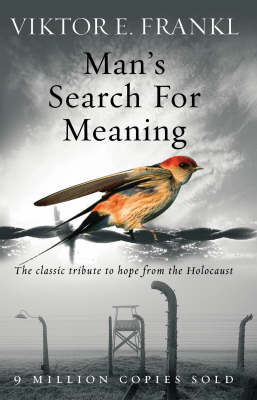
    Man's Search for Meaning, Viktor Frankl

    "Psychiatrist Viktor Frankl's memoir has riveted generations of readers with its descriptions of life in Nazi death camps and its lessons for spiritual survival. Between 1942 and 1945 Frankl labored in four different camps, including Auschwitz, while his parents, brother, and pregnant wife perished. Based on his own experience and the experiences of those he treated in his practice, Frankl argues that we cannot avoid suffering but we can choose how to cope with it, find meaning in it, and move forward with renewed purpose. Frankl's theory—known as logotherapy, from the Greek word logos ("meaning")—holds that our primary drive in life is not pleasure, as Freud maintained, but the discovery and pursuit of what we personally find meaningful."


    JJ and I had a disagreement about this book, based on the fact that I think it's a too psychology heavy history book, and she thinks it's just a psychology book. Admittedly, Frankl is setting out his 'lifes work', an explanation of his theory of Logotherapy, and illustrating it with examples and anecdotes from his time in a concentration camp.


    Weirdly, reading it now the book is a victim of its own success - too much of it reads as common sense, and it was hard to take it seriously because it seemed far too simple. Presumably when first released the insights Frankl brings from his own experiences had a larger impact on the field of psychology and therapy (certainly the quotes and back-ups would suggest so).


    Whilst it was enjoyable in its own way it never seemed to be able to set the tone - not quite historical enough to captivate my interest (and the wartime stories are the most powerful pieces, never failing to shock) and not quite revolutionary enough to make me want to know more.


    The back up on Logotherapy again serves as a simple primer - interesting in its own way but not memorable and far too brief to constitute anything other than an introduction to ideas, something already covered in the main section.


    (I have no idea what you could also try, sorry).